Websites + custom software, for businesses

Websites and software, built around what isn’t working.

We start with the problem, then work out what should exist: a better website, a custom tool, or something built specifically around how your business works.

What isn’t working?

What could exist instead

Website

Then the website has a job to do.

A website built to bring in enquiries

Pages that answer the questions people ask before they get in touch, a simple way to enquire, and follow-up that doesn’t depend on someone remembering.

Could also be online quote toolbooking flow
Website

That’s the first thing to fix.

A clearer website

What you do, who it’s for and why it matters, worked out before any design, so a first-time visitor gets it in one scroll.

Could also be a page for each servicepricing that answers the obvious questions

Internal software

Maybe you don’t need another website.

An operations dashboard

One place for the records the sheets were holding together, with the views each person actually needs.

Could also be stock and orders systemreporting tool

Customer software

Give them somewhere to look first.

A customer portal

Order or job status, documents and answers, live, so the phone rings for the things that need a person.

Could also be order tracking pageself-serve help centre

Custom software

Then we start with the problem, not the format.

A custom digital product

We work out what it has to do and who it’s for, try it small, then build the version the business can rely on.

Could also be workflow toolcustomer productinternal platform

02 — The format comes second

The format comes second.

Pick a problem to see which format it produces

We care less about the format than whether it solves the right problem.

03 — Capability lab

Move the pieces. See what they become.

The same function becomes a very different product depending on who needs it: a booking experience or a scheduling tool, a configurator with live quotes or the pricing rules behind it, order tracking or a job board, a customer portal or an operations dashboard.

Functions

For customers

Nothing for customers yet

For the team

Nothing for the team yet

Press to pick up, then choose where it goes.

04 — Selected work

Two we’ve already built.

Past work is the evidence, not the point. Both are live.

  • FAFF

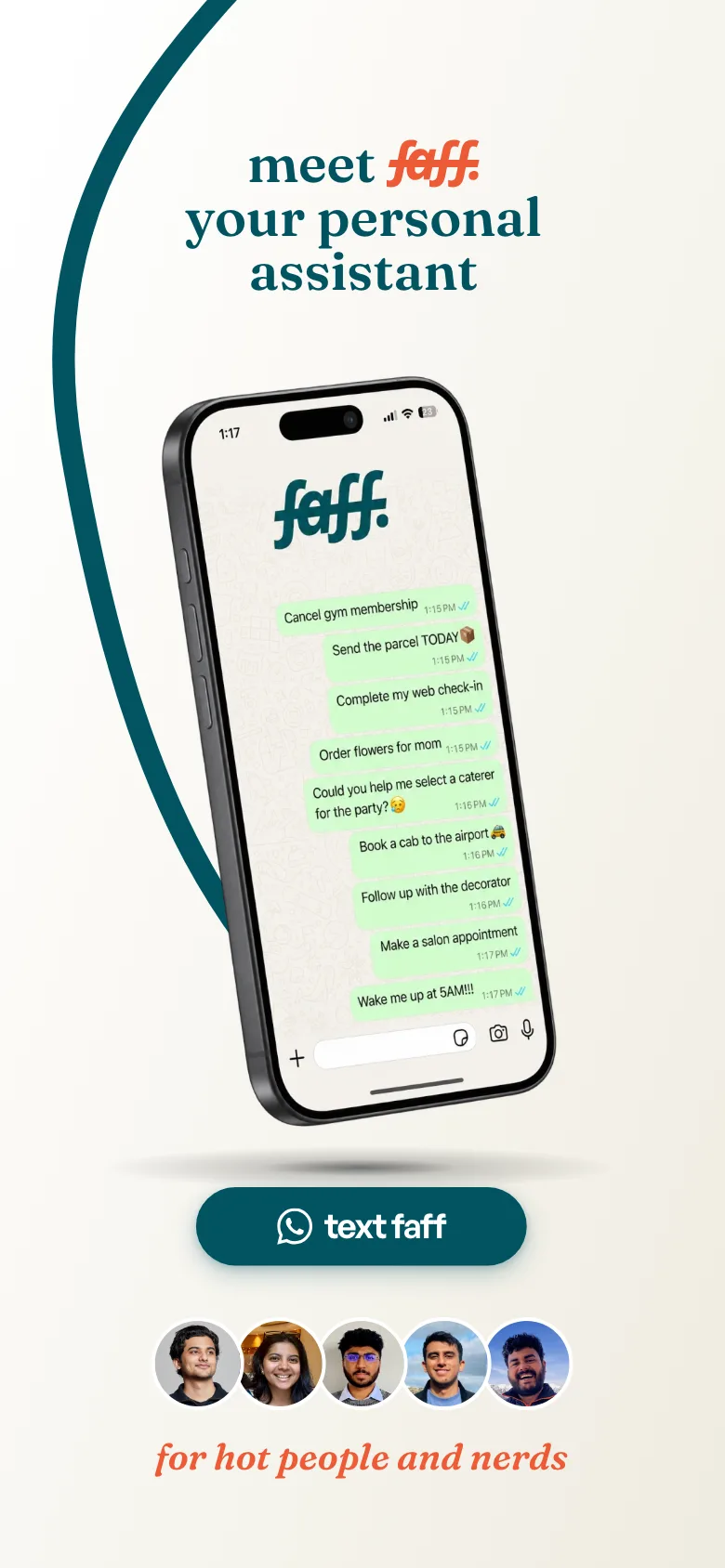
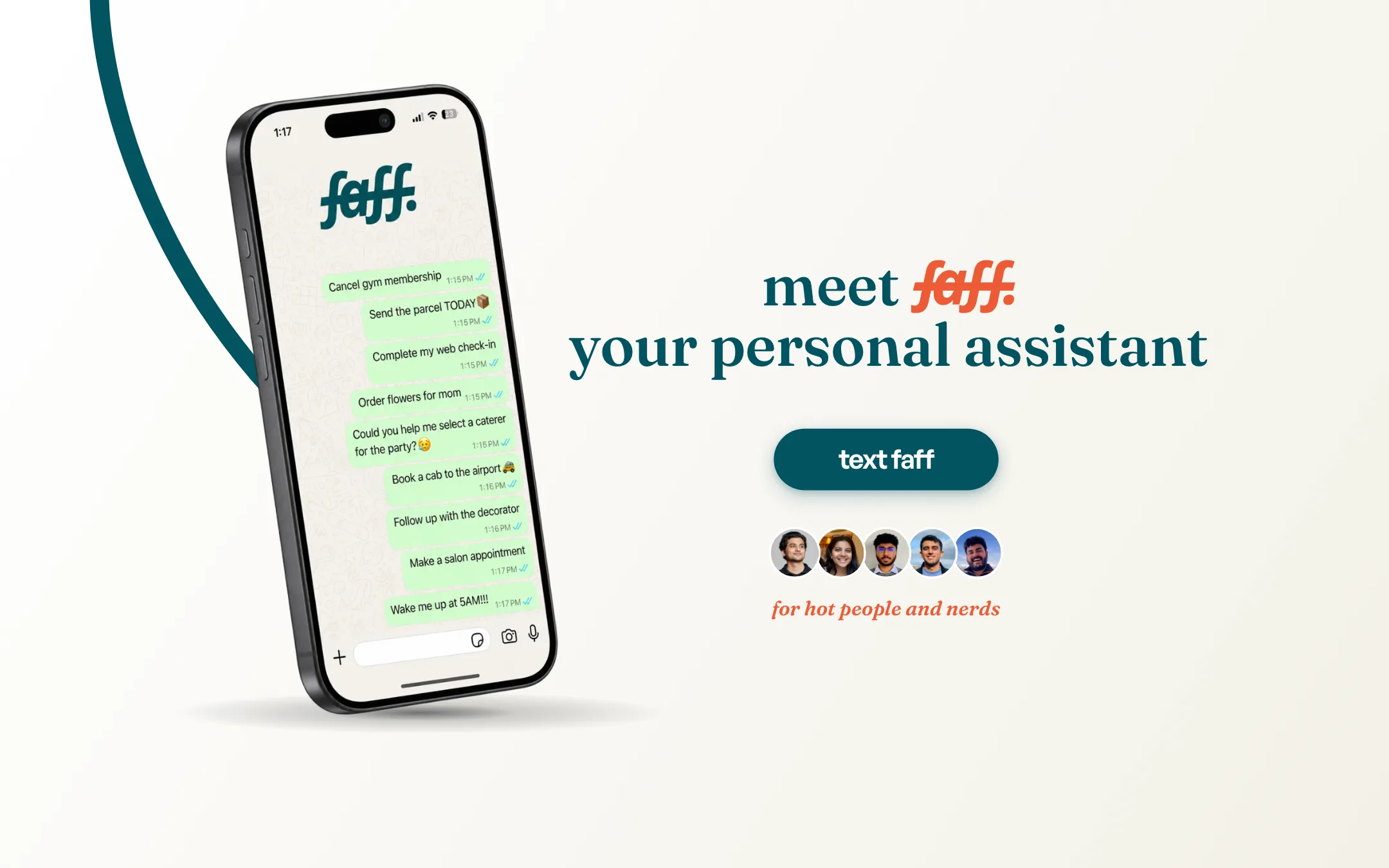
    A launch website for a personal assistant service that lives in WhatsApp. The site had one job: make a new kind of service understandable, and make it feel easy, within a scroll.

    The FAFF homepage: a phone showing a WhatsApp chat of everyday requests beside the headline “meet faff, your personal assistant”.
    The FAFF homepage on a phone.
    1. One sentence carries the explanation. Nothing on the first screen assumes you know the category.
    2. One action, and it is the product: texting faff is the call to action and the service at once.
    3. The service shown as what it actually is — a thread of real errands — not described as one.
  • Assam Brooms

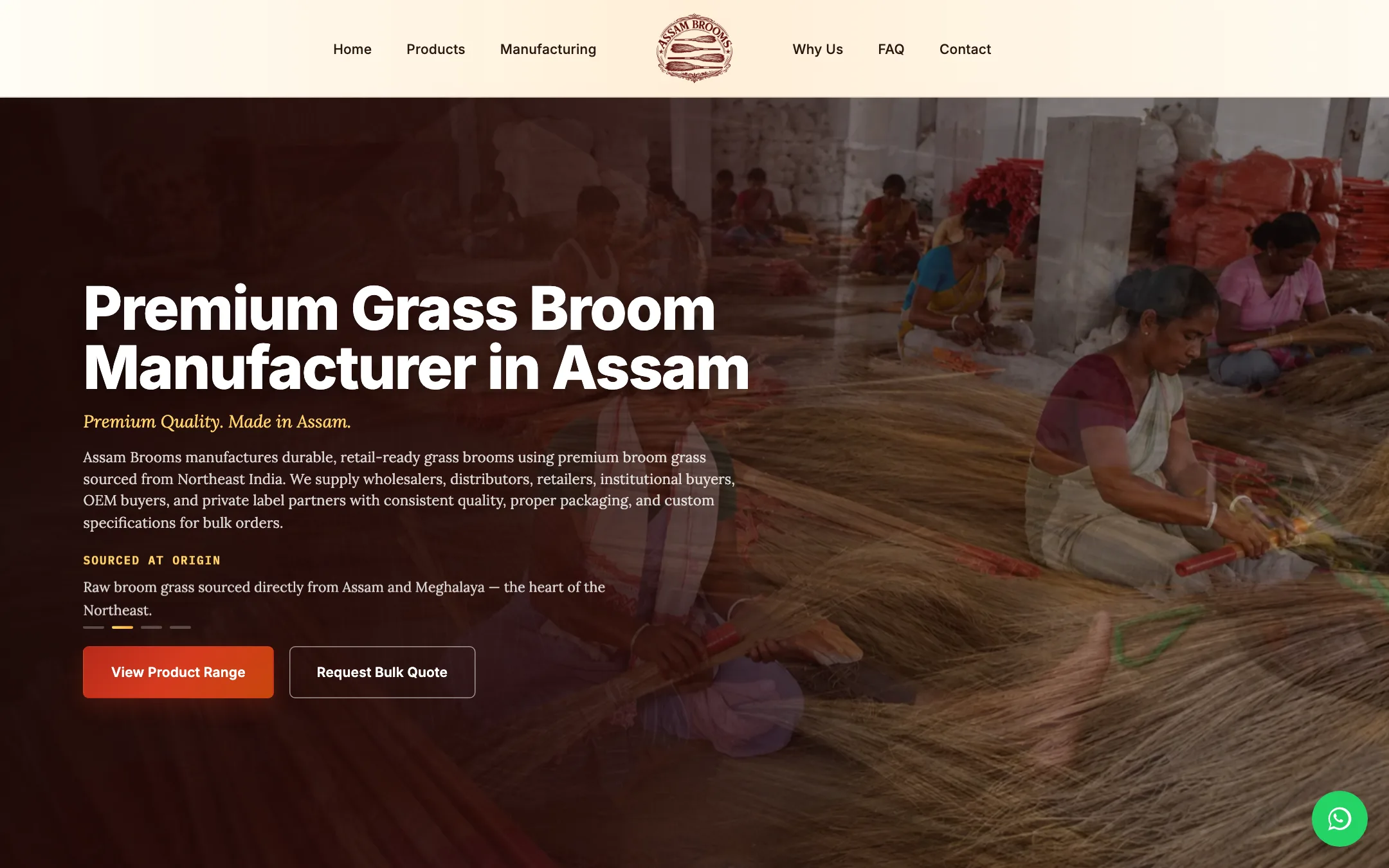
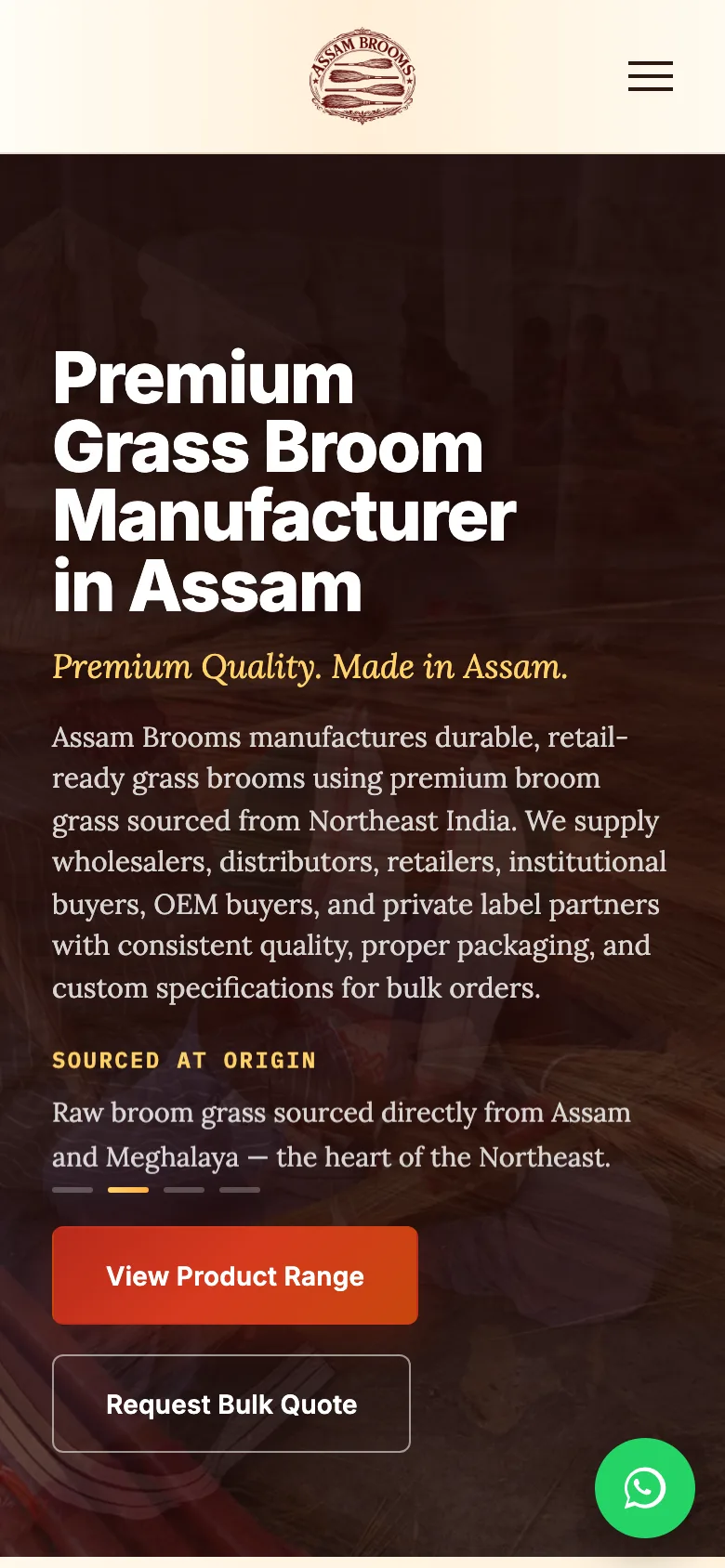
    A website for a grass-broom manufacturer in an extremely niche market. The brief was discoverability, with an enquiry or quote never more than a tap away.

    The Assam Brooms homepage: “Premium Grass Broom Manufacturer in Assam” over a photograph of workers binding brooms, with product and quote buttons.
    The Assam Brooms homepage on a phone.
    1. The heading is the phrase buyers search for, written so it still reads as a sentence.
    2. Every kind of buyer named on the first screen — wholesaler, distributor, OEM, private label.
    3. Two actions in one row: see the range, or ask for a price. Never more than a tap away.

Private software

Internal toolsDashboardsWorkflowsCustomer systems

Some of our work stays behind the business.

Internal tools, dashboards and workflows deal with how a company actually operates: its processes, its numbers, its customers. That is what makes them useful, and why we keep them off a public portfolio.

If you want to see what we’ve built, we’ll walk you through the relevant work privately.

See what we’ve built privately

05 — How we work

From “this isn’t working” to something that does.

Four stages, each with one job. Enough structure to be dependable; not enough to slow anything down.

  1. We start with the problem where it lives: the business, the people involved, the current workflow, the customers, the constraints.

    A few good conversations and a close look at how things run today. No drawn-out discovery phase.

  2. Whether the answer is a website, a tool, a product or a combination; what it has to do; who has to use it; what can be simplified away.

    Most of the simplifying happens here, before anything is built.

  3. Design and development happen together, not in separate departments, so decisions don’t get lost in the handover.

    We prototype where it helps, build the working product, and test the interactions that matter.

  4. Real use tells us things a brief can’t. We watch how people behave, listen to feedback, and adjust as the business changes.

    We stay involved when that’s useful, not as a condition.

06 — Where we work

Distance is mostly a timezone problem.

Based in Guwahati, Assam, we work remotely with businesses across India, the UK, Canada and Dubai. Understanding, design, review and build all happen at a distance.

  • IndiaIST · Guwahati
  • UKLondon time
  • CanadaEastern time
  • DubaiGulf standard time

Drag or use the arrow keys to turn it

07 — Start a conversation

What isn’t working?

Tell us what’s going on. We’ll work out the right next step together.

We reply by email.